
Atlanta Jewish Foundation Impact Story
March 18, 2026
When Dr. Matthew Goldstein speaks about genetic testing, it is not as an abstract medical issue. It is deeply personal.
Matt and his wife lost their daughter, Havi, to Tay-Sachs disease. She died just months after her second birthday. What made the tragedy even more devastating was that the couple had taken the responsible step of pursuing genetic carrier screening before pregnancy. But the wrong test was ordered, and the risk was misreported.
Havi’s diagnosis changed the course of Matt’s life.
Today, he serves as CEO of jscreen, a national nonprofit dedicated to making genetic screening available and accessible to Jewish families and communities across the United States.
“It has been such a gift to do this work,” Matt says. “I’ve worked with some incredible people over my career, and I have never been part of a team that is so purely, authentically committed to this mission.”
For Matt, the work is also a way to keep his daughter’s memory alive.
“This is a way for me to be Havi’s dad in a way that I don’t get to traditionally,” he says. “It’s really amazing to be able to talk about her almost every day, and to have her story and her presence and her spirit out in the world.”
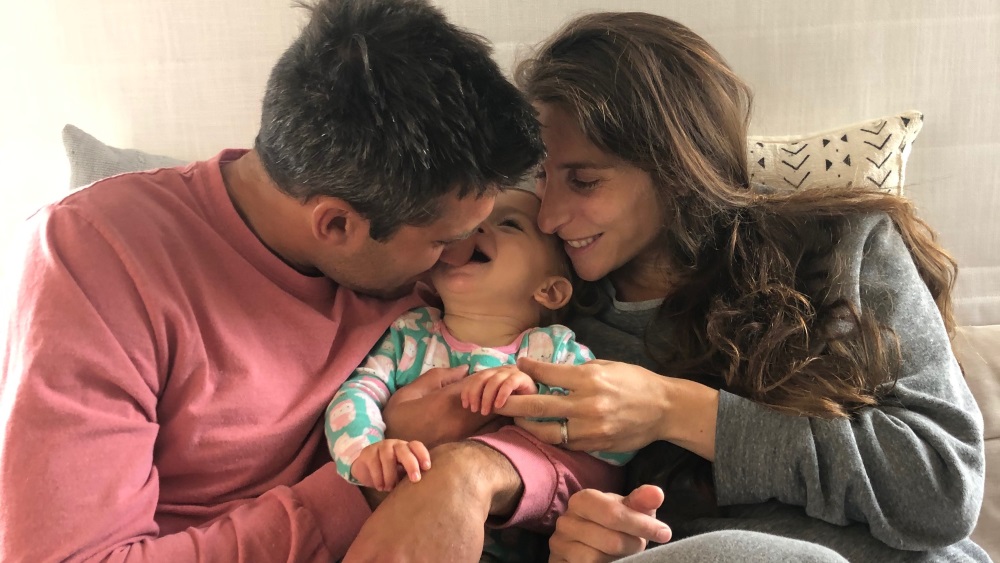
Dr. Matt Goldstein with his wife, and daugther Havi, Z”L.
A Vision Born in Atlanta
jscreen’s story began in Atlanta, with Founding Executive Director Karen Arnovitz Grinzaid. For years, Karen worked at Emory University as a genetic counselor, supporting families whose children had been diagnosed with severe genetic diseases.
Over time, Karen noticed a troubling pattern. “Testing had been available to give that family a heads up before they had children and it wasn’t offered to them, or inadequate testing was offered to them, or the wrong test was offered to them.”
This lack of genetic education amongst health providers, paired with insurance limitations making crucial testing unaffordable to many patients, led to the the launch of what was originally called the Atlanta Jewish Gene Screen.
With support from Bernie Marcus, this pilot program aimed to educate the Jewish community about genetic risks and make testing easier to access.
The idea quickly expanded beyond Atlanta. In 2013, with additional funding from the Marcus Foundation, jscreen launched as a national program. At the time, the concept was groundbreaking.
“We had this crazy idea that we were going to do this program via telehealth,” Karen says. “We’re going to let people sign up on their computer from home. We’re going to let them test on saliva. We’re going to provide their genetic counseling via telehealth.”
Today, that once-radical idea has become a simple, powerful tool for preventative health. As cancer diagnoses in young people are rising and reproductive rights are eroding, genetic disease screenings are more essential than ever.
“With everything that’s happened with Roe v. Wade, we emphasize that the best time to do reproductive carrier screening is before you get pregnant, to make options like IVF with preimplantation genetic testing possible,” Karen shares. “If we find that you have a risk to your future kids, there are things that you can do to work around that.”
Knowledge Is Power
jscreen provides two primary types of testing: reproductive carrier screening and hereditary cancer screening. Individuals can order the tests online, provide a saliva sample at home, and receive results along with professional genetic counseling.
The program helps identify carriers of genetic conditions that are more common in the Jewish population, including Tay-Sachs disease and many others. While carriers are typically healthy, if two carriers have a child together, there is a 25 percent chance that the child will develop the disease.
One of the biggest challenges, Karen says, is awareness. “A lot of people think that if they’ve not seen this happen in their family, they’re not at risk,” she explains. “These things can be silent.” In fact, most cases appear without warning. “80% of the time that kids are born with these genetic diseases there is no known family history.”
Education is therefore one of the organization’s most important priorities. “Knowledge is power,” Karen says. “Your genetic make-up is already there; it’s just a matter of whether it’s going to impact you in your lifetime.”
jscreen is now working to expand to other areas of genetics, including cardiac risk.
While jscreen now serves individuals across the United States, Atlanta remains a central hub for its work. The organization has long received allocations from the Jewish Federation of Greater Atlanta and continues to benefit from the region’s strong philanthropic ecosystem.
Atlanta Jewish Foundation Donor-Advised Fund holders have granted over $200,000 to jscreen, funding outreach, education, and testing subsidies – ensuring that cost never becomes a barrier to care.
From Grief to Hope
For many people, genetic testing can feel intimidating or frightening. jscreen’s mission is to ensure no one has to navigate that uncertainty alone.
Matt recently shared a message sent to him by his rabbi that perfectly captured the organization’s spirit: “Our tradition teaches us – do not be afraid. This is not because danger does not exist, but because fear cannot be the final word for our people.”
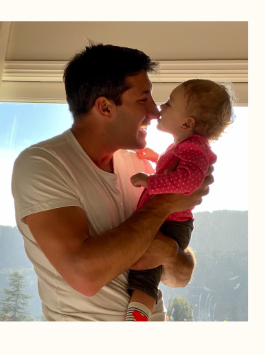
That idea resonates deeply with Matt’s own journey. By helping families access knowledge earlier – and avoid tragedies like the one his family experienced – jscreen is turning grief into prevention.
And for Matt, every life protected carries a piece of Havi’s legacy forward. “That’s all we want as parents,” he says. “To see our kids out in the world making a difference.”
Learn more about jscreen and women’s health at the upcoming Women’s Philanthropy Pop Up event on April 22nd, 2026. Register here.
Support jscreen through your donor-advised fund portal, or schedule a Jewish giving consultation to discover tax-smart ways to support the causes that matter most to you.